
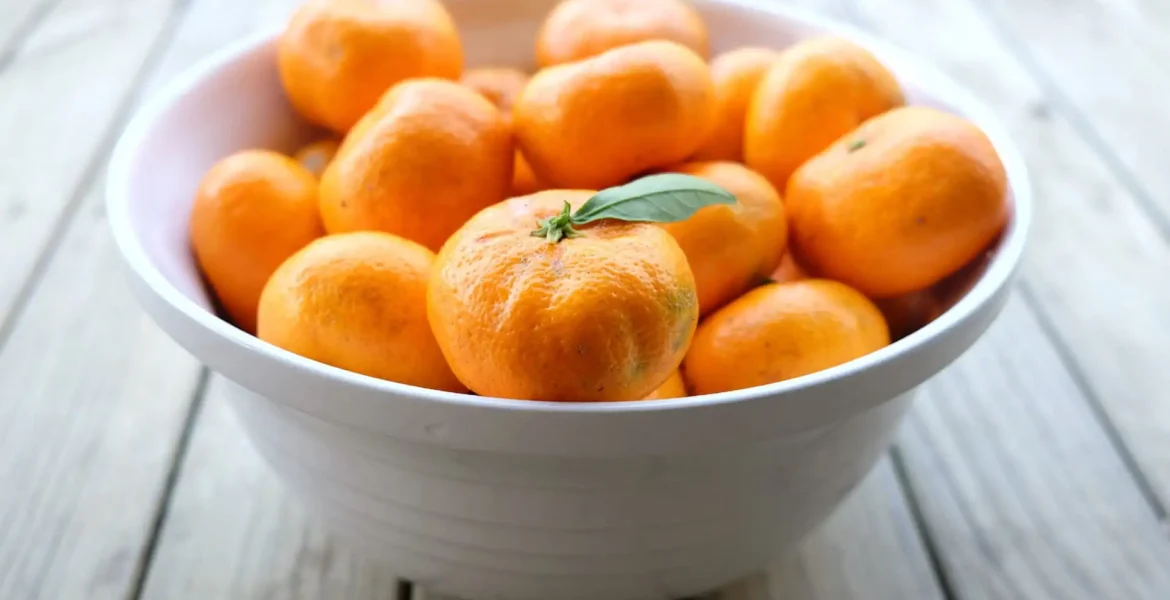
Mandarins are one of the most popular winter fruits. But even the freshest citrus can spoil quickly if stored incorrectly. Below, you’ll find practical tips on how to choose quality mandarins and how to store them so they stay juicy and fragrant for as long as possible.
How to Choose Mandarins for Storage
To ensure your mandarins keep well, start with proper selection:
- Color doesn’t have to be perfectly bright orange—slight green patches are normal and don’t affect the taste.
- Firmness. The fruit should feel dense, with the peel fitting snugly around the flesh. Avoid mandarins that are too soft, dry, or overly hard.
- No defects. Reject fruits with mold, rot, dents, or suspicious spots.
- Aroma. The scent should be fresh, without mustiness or mold.
- Leaves on the fruit don’t guarantee freshness — they only create an appealing look.
How Long Mandarins Can Be Stored
The storage time depends on temperature and humidity:
- In the refrigerator (2–6 °C with 85–90% humidity) — up to 2 weeks.
- On an insulated balcony or in a cellar — about the same, but temperature fluctuations can shorten the storage time.
- At room temperature — up to 10 days.
General Storage Rules
- Remove mandarins from plastic bags immediately—condensation leads to mold and faster spoilage.
- Do not wash the fruits before storage: the natural protective coating on the peel helps preserve freshness.
- Keep them away from fruits and vegetables that release ethylene gas (apples, bananas, pears, peaches, avocados, tomatoes, etc.), as it accelerates ripening and spoilage.
Where to Store Mandarins
In the Refrigerator
This is the best long-term storage method.
- Make sure the fruits are dry; pat them with a towel if necessary.
- Store them loosely in the vegetable drawer or in an open container or paper bag on the bottom shelf.
- Check the fruits periodically and remove any spoiled ones.
On a Balcony or in a Cellar
Suitable if the area is cool, dry and protected from temperature swings.
- Select intact, dry fruits.
- Wrap each mandarin in paper to protect it from excess moisture and temperature changes.
- Place them in a single layer in ventilated crates or boxes.
- Avoid placing the container directly on the floor—use a shelf or stand.
- Occasionally unwrap and inspect each fruit.
At Room Temperature
Best for small batches you plan to eat soon.
- Store mandarins in a shallow bowl or container in a single layer.
- Keep them away from heaters, stoves, and sunlight.
- Check their condition regularly.
Frequently Asked Questions
Can you freeze mandarins?
Freezing whole mandarins is not recommended—they become watery and lose texture. You can freeze peeled segments to use later in cocktails or other drinks.
Why do mandarins get moldy in the refrigerator?
This usually happens because of excess moisture and condensation. Store them without packaging, wipe the vegetable drawer regularly, and make sure the fridge door seals properly.
How to revive slightly dried mandarins?
Place them in warm (not hot) water for 1–2 hours. The peel will rehydrate and soften. Keep in mind that after this “revival,” they should be eaten immediately.
Conclusion
Proper mandarin storage doesn’t require much effort—just choose the right place, ensure good air circulation, and check the fruits regularly. By following these simple tips, you’ll enjoy fresh, fragrant, and juicy mandarins for much longer. Let these bright citrus fruits bring you joy, flavor, and a bit of winter magic every day.