
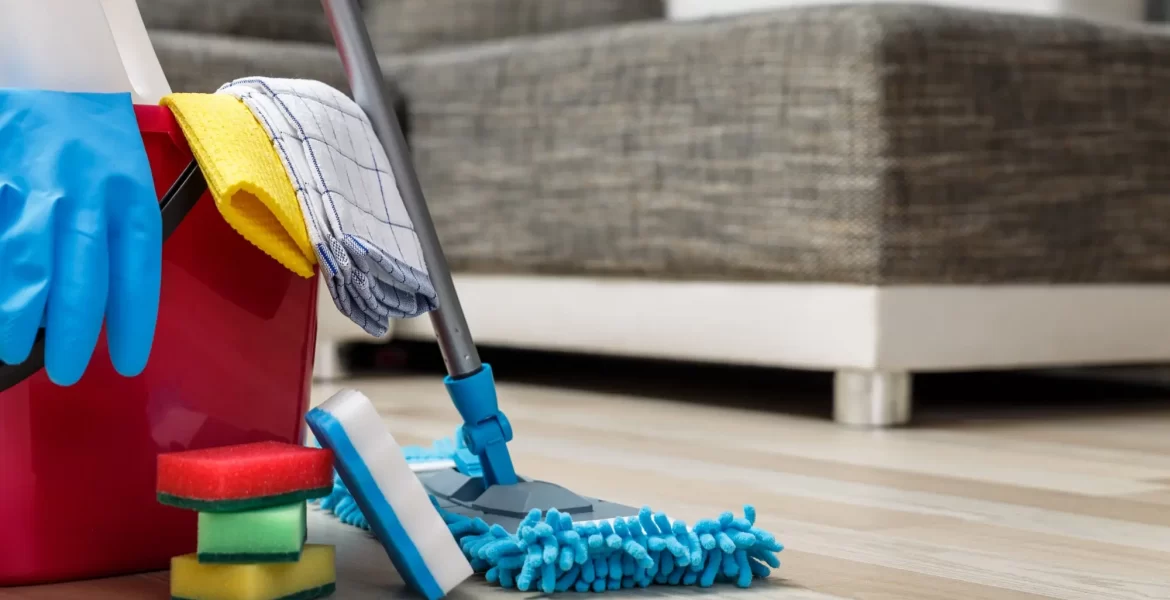
You should not do this if you want to achieve perfect order and cleanliness.
1. To start cleaning from the floor
Sometimes you want to do the most unpleasant and difficult first, for example, vacuum and wash the floors. And after that, do the rest of the little things: wipe the dust, decompose things. But in this case, at the end of the cleaning, the floors, in a good way, will need to be washed again. Crumbs, small debris and other dirt will inevitably fall on them, something will crumble or crumble.
It will be better to stick to the golden rule of cleaning – clean from top to bottom. First, put things in their places, then wipe the dust, wash the plumbing and cabinets, and only at the very end take care of the floors.
2. To use one rag for all surfaces
Pollution in different parts of the house or apartment varies in type and intensity. If you do not change the rag or napkin, everything will look clean, but there is a risk of simply transferring dirt and microorganisms from one room to another. For example, grease from the kitchen countertop to the nightstand in the bedroom. Or hair and toothpaste stains from the bathroom shelf to the dining table.
The solution is to purchase several sponges and rags for different purposes, or use disposable wipes and take a new one when moving from one room to another.
3. To use the same rags for a long time
All reusable sponges, wipes and napkins need regular washing or replacement. For example, accessories that are used for washing dishes and kitchen sinks are recommended to be updated at least once a week.
And rags for other surfaces are best thrown into the washing machine immediately after cleaning. If this is not done, dirt and microorganisms will remain on the fabric, which will again be on tables, shelves and bedside tables next time.
4. To vacuum with a filled bag or container
Sometimes disposable accessories run out at the most inopportune moment, and sometimes it’s too lazy to shake out a reusable bag or container, because the mechanism still works, albeit somehow. But a vacuum cleaner that has not been cleaned in time sucks up dust and debris worse – even the manufacturers themselves point to this – and the quality of cleaning is significantly reduced.
To prevent this from happening, the bag or container must be changed / emptied as soon as it is full, and at the same time wipe the “insides” of the vacuum cleaner with a damp cloth.
5. To use the wrong inventory
Probably everyone at least once faced with a weak vacuum cleaner. Or a stupid mop that spins all the time and does not wring out well. Or a vaunted window cleaning sponge that doesn’t really clean as well as advertised.
All these things somehow cope with the task, but in the end there are stains, smudges, dust, stains and debris in the corners. That is, the quality of cleaning with poor inventory is greatly reduced, and the irritation from the process is growing.
Therefore, it is worth spending a little more money and acquiring tools that facilitate the task of putting things in order, and not make it completely unbearable: buy a new, more powerful vacuum cleaner, a mop with a strong handle and a convenient nozzle, a set of microfiber cloths.
6. To fold things up
It seems that he has just laid out stocks of sweaters or towels in a neat, even pile – and she has already “floated”. And as a result, just a couple of days later, chaos reigns on the shelf again, and every time the cabinet door opens, things fall out onto the floor.
And all because it is almost impossible to carefully pull something out of the heap and maintain such order for a long time. Marie Kondo, the author of the Magic Cleaning system, suggests rolling clothes, linen or towels into rolls. And then stack them one on top of the other on a shelf, like wallpaper rolls in hardware stores. Then things will be better visible and it will be much easier to get one sweatshirt without destroying the entire structure.
In addition, Marie Kondo recommends that as many clothes as possible not be folded at all, but hung on hangers. And only small things like underwear or T-shirts should be placed in the chest of drawers in “rolls”.
7. Don’t to use Organizers
It is easy for all of us to imagine kitchen shelves with a bunch of bottle openers lying around, spatulas, bags of spices, rubber bands and other little things. Or drawers of a children’s table, from which felt-tip pens, sharpeners and pieces of plasticine fall out.
This kind of chaos can be avoided by using organizers and organizing everything so that each item has its own place. These can be ordinary plastic containers or with drawers, drawers with compartments, baskets.
8. To remove dust only with a brush
Bright, fluffy rags, like movie maids, can come in handy for dusting small, complex items like a collection of figurines.
For large, flat surfaces, it’s best to use microfiber cloths or slightly damp disposable cleaning wipes.
9. Do not to declutter
The main cause of disorder is an excess of things. They constantly need to be cleaned and every time spend time on this. They clog shelves and drawers, preventing them from maintaining order. Moreover, we most often do not need as many things as we keep at home, not really using anything and keeping our “wealth”, because it’s a pity to throw it away and “suddenly come in handy”.
Some cleaning experts recommend getting rid of a certain number of items each week. Others advise throwing away or giving away one old item every time you buy a new one to keep the balance. Marie Kondo suggests getting rid of everything that does not cause joy and pleasant memories.
Whatever approach you choose, it is advisable to declutter at least three or four times a year. Pulling everything out of closets, honestly asking yourself if you need those beautiful but too tight jeans or a set for curly cutting vegetables – and ruthlessly part with everything superfluous.
10. To do a general cleaning once a week
For some rooms, this is even common – for example, in the bedroom, the mess does not form so quickly and there is no need to wash the room from top to bottom every 7 days.
But in the kitchen, bathroom or hallway it becomes dirty much faster and cleaning, including large-scale cleaning, is needed more often. If you do nothing on weekdays and do nothing but clean up on weekends, then by Thursday or Friday these rooms will already be untidy. Especially if a large family lives in the house or there are pets.
To keep all areas more or less clean at all times, you need not an occasional cleaning, but a system of putting things in order – a set of small daily actions that will not allow the house to plunge into chaos.