
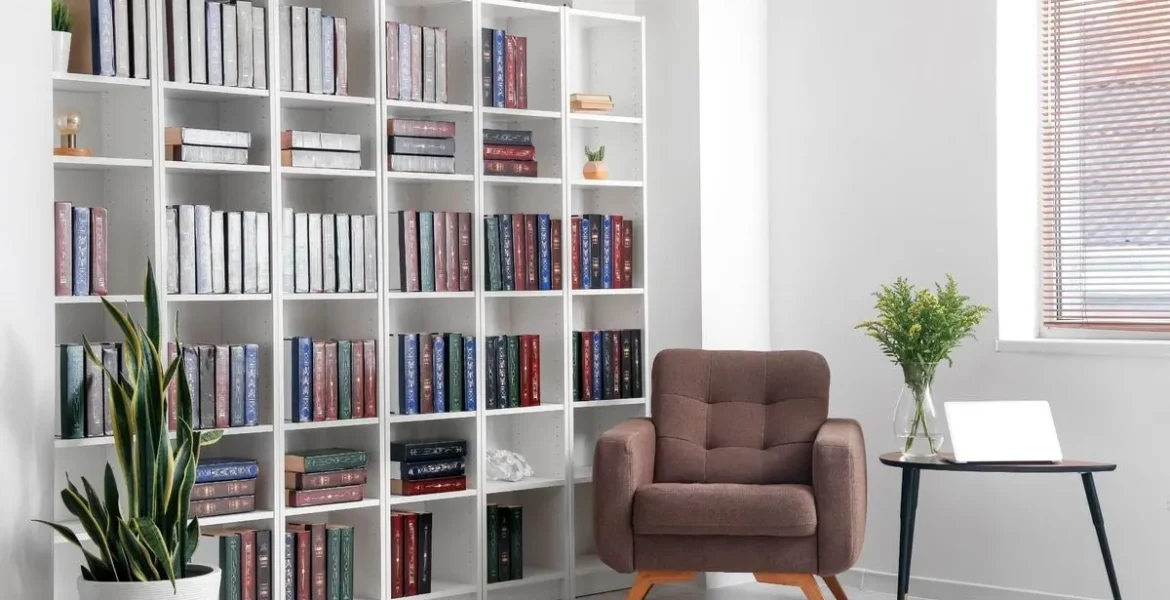
A home library is beautiful, but only until it begins to resemble a municipal one. These tips will help protect books from dust or moisture and not spoil the interior.
1. Make your library the centerpiece of your decor
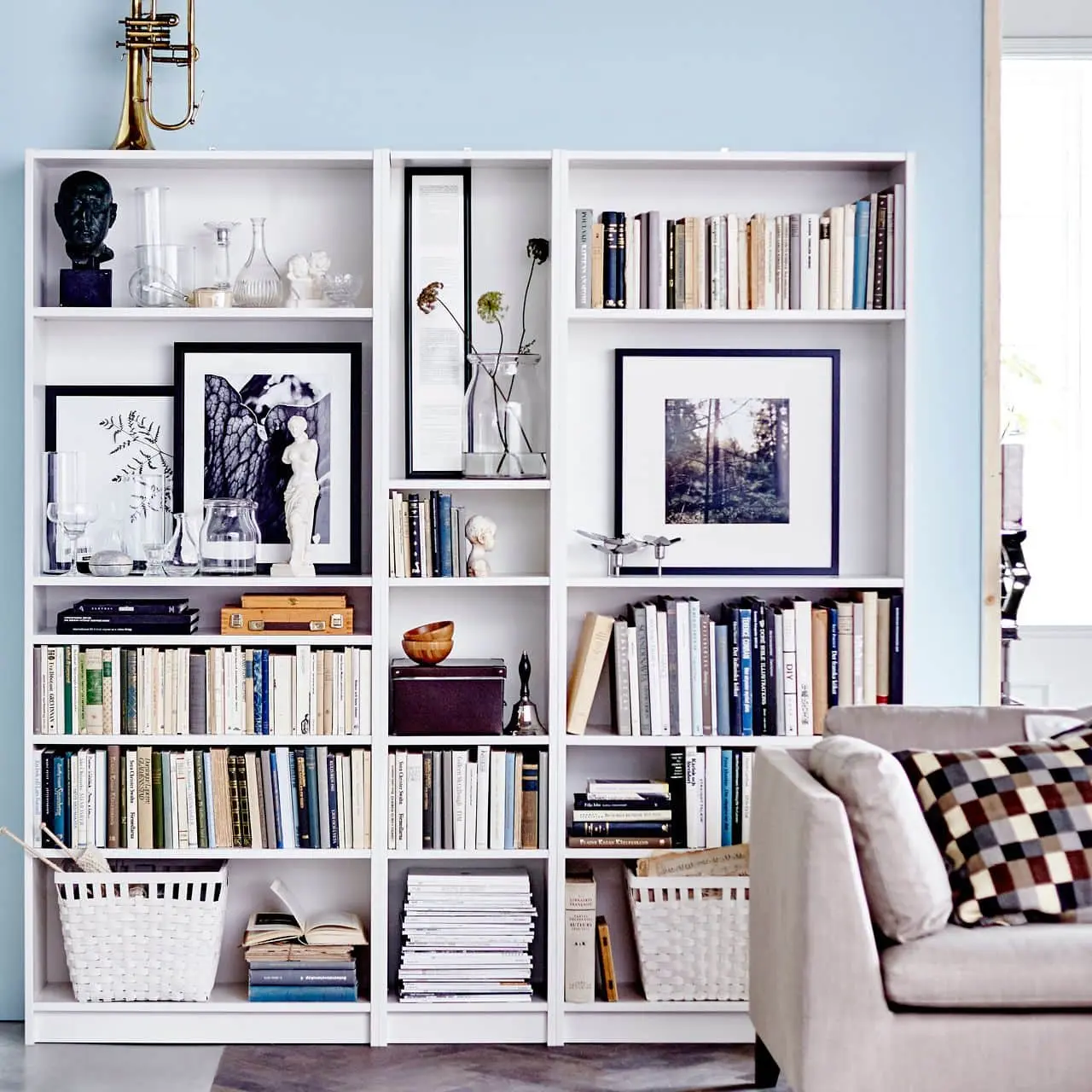
At the same time, you need to remember the rule of balance in interior design. It means that bright elements need rhymes, otherwise they will take all the attention. In the case of a book accent wall, there is a risk that the room will visually “fall” to one side. To balance this element, you can lay a colored rug on the floor or hang posters on a spare wall.
2. Use multifunctional furniture
Not everyone knows that a bed can also be a shelving unit. Choose an option in the store not on legs, but on a podium with open drawers. This is where your books can be placed. You can also organize a shelving unit at the headboard. If you want to hide part of the library, then you can simply put the books in closed storage spaces under the bed, or allocate part of the shelves for them in the dressing room or large closet.
A children’s bed can also become multifunctional. For example, in the case of a two-level design, instead of a sleeping place, shelves can be installed on the upper part. If the child prefers to sleep on the second floor, then the bookcase will fit into the lower tier.
3. Place books in different rooms
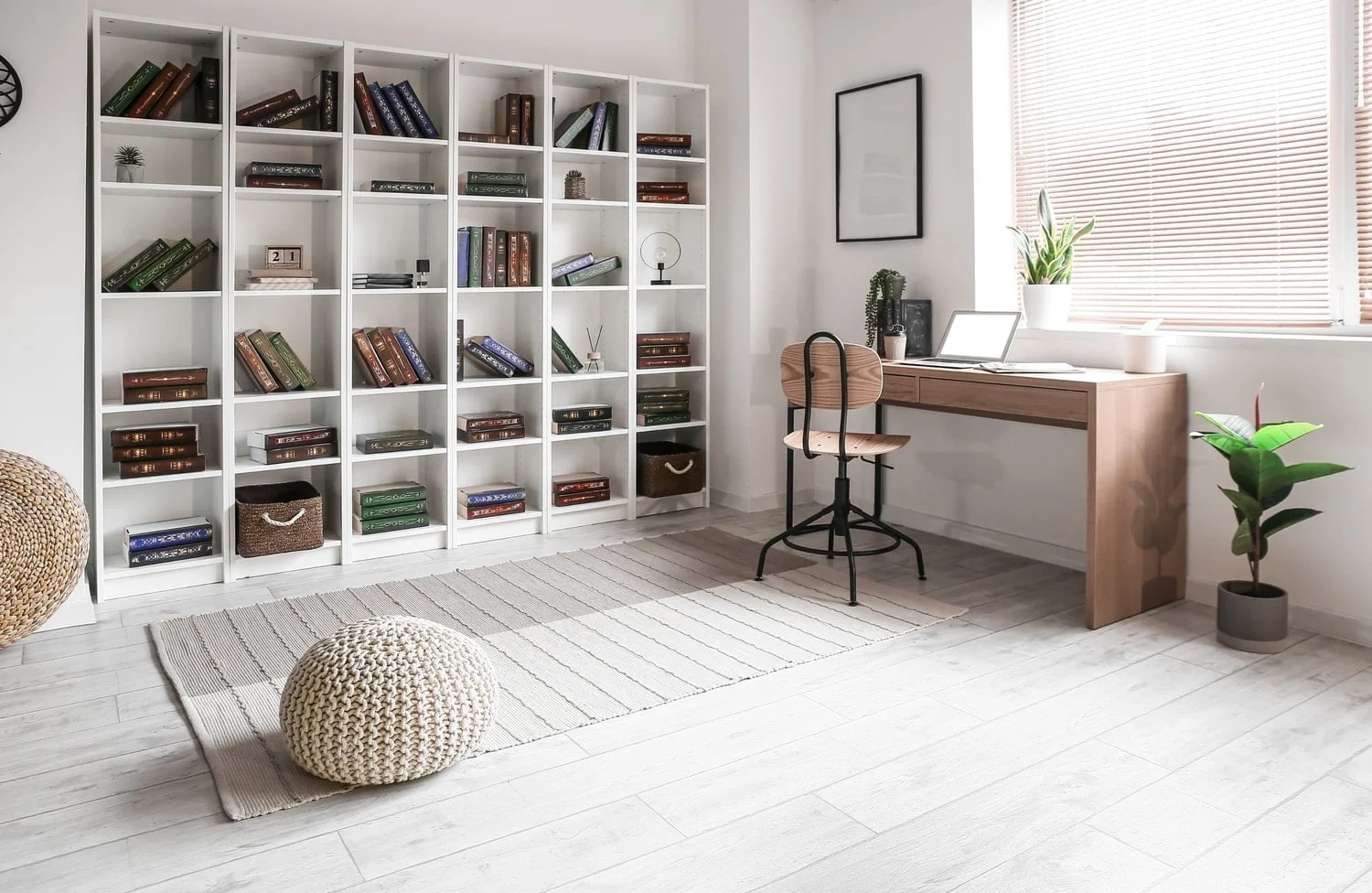
It’s rare that someone is lucky enough to have a full-fledged office or a spacious living room in a typical apartment where a library could be placed. If you don’t want to part with your books, try dividing the entire printed collection into several groups and distributing them throughout the apartment.
Take children’s books, adventure novels, coloring books and atlases to where they are needed most – to the nursery. It’s logical to keep books on cooking and household chores in the kitchen. Just make sure they are not dangerously close to a wet or cooking area. A cabinet above the refrigerator or closed top drawers are great options.
Even an insulated balcony can be suitable for storing books. So, from a place where skis, pickles and boxes of household appliances are stored, it will turn into a lived-in and cozy space.
4. Use spaces that are usually left empty
For example, a small section of walls around a window. As a rule, it is completely covered with curtains, but you can organize narrow shelving in this area to make the most of the space. In this case, it is better to replace the curtains with soft Roman blinds or blinds – let the books be in sight.
The situation is similar with the end wall of the room, if there is a doorway on it. In typical apartments, it is difficult to fit full-fledged furniture on the sides of the door, so the space remains free. On this wall you can build the same shelving as at the window.
There is also an option to make shelves under the very eaves – along one wall or along the entire perimeter of the room. But this method is not suitable for rooms with low ceilings – such edging will visually make them even lower. Before assembling shelves, consult with a designer or model the final version in free interior designers.
5. Monitor the condition of your books
No matter how conveniently you place your collection, everything can ruin its unkempt appearance. Dust, torn or faded roots will immediately give away the inattentive owner. Books age, but this process can be, if not stopped, then slowed down. Here are some basic rules.
- Books do best in rooms with a humidity of about 40–50%. Excess moisture can cause mold to appear. If books are kept in dark, closed closets with poor ventilation, then it is useful to periodically ventilate them.
- Keep books away from direct sunlight and other high-intensity light sources. They accelerate paper deterioration and fading of covers.
- Wipe off the dust. Ideally, books should be stored in closed cabinets, but if you don’t have such, then periodically clean the shelves. Take a piece of ordinary soft cloth, slightly dampen it and wipe the closed book from all sides. A handheld vacuum cleaner will help speed up the process.