
It is worth making a list of things in advance so as not to forget anything.
If you often go hiking, then you probably know what to take with you to the forest, to the mountains or to the lake shore. Most likely, you will pack a backpack with your eyes closed and will not forget anything. Our advice will be useful for those who rarely go hiking or are just starting to get acquainted with this type of recreation.
What kind of backpack will you need
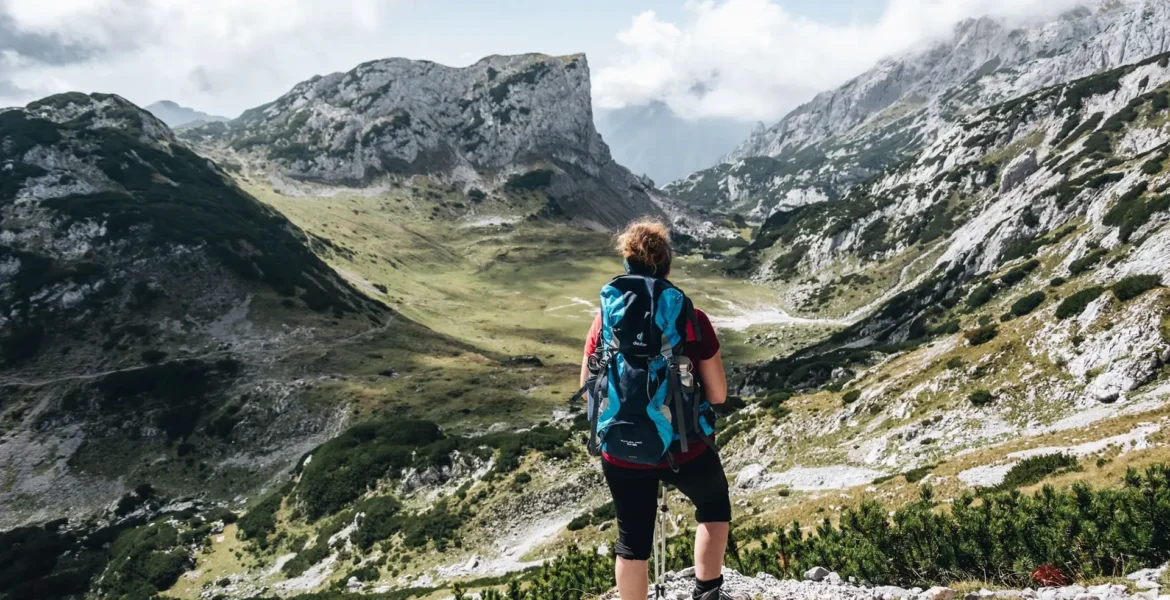
For short hikes without an overnight stay, a small volume will be enough – about 45-50 liters. If you are going for 2-3 days, you should take a larger backpack – from 60 liters. It is better to choose equipment with a reinforced back of an anatomical design, which can be adjusted depending on height. If the back is also ventilated, this will be an advantage.
It is great if the backpack is made of waterproof material and has a large number of external pockets and flaps. Sometimes a lightweight waterproof cape is included in the kit, which will protect the product itself and the things attached to the outside from the rain.
Don’t overload your backpack, otherwise the hike may become a burden. Beginner hikers without health problems can focus on a weight of several kilograms, while trained athletes will easily be able to increase the load.
Before buying, put on a backpack and check whether you can adjust it to your height, whether the straps fasten well, and whether you are comfortable with such equipment. All straps should tighten without gaps, and the backpack should not dangle behind your back.
What things should you take on a hiking trip
Take everything for comfort on the way and at a halt. If you plan to move only on foot, refuse unnecessary things that will weigh down your backpack. Here’s what you might need on a hike.
Clothing and footwear
If you are going on a trip in the warm season, choose closed, durable, and lightweight clothing. For example, a thick shirt with long sleeves, an almost weightless windbreaker with a hood, cargo pants, high socks, trekking boots or sneakers. It is great if the shoes are waterproof. You will also need a hat that will protect you from the sun. This can be a Panama hat, a cap, a baseball cap or a bandana.
You will put this set on when getting ready for the trip. If it is hot, you can put the windbreaker in your backpack.
Here is what else should be in the hiking set of clothes:
- Light pants for walking in the heat. It is great if you can unfasten the legs at the knee and turn them into shorts.
- Two pairs of underwear.
- One or two short-sleeved T-shirts.
- Thermal underwear – a long-sleeved T-shirt and pants. This will come in handy if it gets cold at night.
- Wear-resistant socks – three pairs. It is better to take special trekking socks.
- Warm clothes. A fleece tracksuit will do.
- Raincoat.
- Lightweight shoes for the camp – Crocs, sports sandals.
- Beach accessories – a swimsuit, swimming trunks. You can take two sets to sunbathe in the second one while the first one dries after swimming.
You may need something else. For example, warm socks or a spare bandana.
Equipment for the hike and camp
Decide in advance who will take the pots, tripods and hooks for them, as well as an axe and a saw. If you are going to cook food on a gas burner, make sure that someone from the group takes both it and gas cylinders. Here is a list of the rest of the equipment:
- Tent. As a rule, it accommodates two to four people, it can be taken by the most physically fit and experienced participant in the hike.
- Awning for the camp. You can take shelter from the rain under it. Or, for example, protect firewood from a heavy downpour. The awning, as a rule, is also taken by one participant in the group.
- Sleeping bag in a waterproof cover. It is better to choose an option designed for temperatures from 0° or +5° and above. Sometimes in equipment that is marked “from +10º”, and even more so “from +15°”, it can be cold even on a summer night. It is better to pack the sleeping bag in the cover that comes with it: in severe weather, it will protect it from rain.
- Mat under the sleeping bag. It is convenient to use a self-inflating one – it will quickly fill with air. The mat will also come in handy on the beach: it is comfortable to sunbathe on.
- Individual tourist seat with a belt – tourists often call it “under the butt”.
- Headlamp.
- Sunglasses.
- Microfiber towel – it dries faster.
- Sports water bottle with a capacity of 0.5-0.7 l.
- Rope – needed for drying wet clothes and swimsuits.
- Clothespins — useful in strong winds.
- Matches in waterproof packaging or a lighter.
- Folding knife.
- Thread and a needle.
- A set of dishes. At a minimum — a deep plate, a cup, a tablespoon. You can take a fork and a teaspoon if they add to your comfort.
- Power bank.
If the weight of your backpack allows, you can take a lightweight folding stool or a similar chair with armrests.
First aid kit and hygiene products
If you regularly take any medications, put them first. Put a bandage, a bandage, hydrogen peroxide or chlorhexidine, an antipyretic. If you need more medications, pack a first aid kit. Here’s what else you might need:
- Toilet paper.
- Wet wipes.
- Soap.
- Toothbrush and toothpaste.
- Personal hygiene products for women – pads or tampons, if necessary.
- Mosquito repellent spray.
- Sunscreen.
You can also take a moisturizer (it will come in handy if your skin is irritated). And also hygienic lipstick or a caring lip balm.
Food and drinks
Think about what you will snack on during the trip and what you will cook in the camp. Make a list of products and agree on what each participant of the hike will take from the list.
Try to choose options with a long shelf life. If you take something perishable, be sure to use a camping refrigerator and cook food from these products first.
How to pack things in a backpack
Put on the bottom what you definitely will not need on the road. This can be a tent, a sleeping bag, warm clothes, shoes for the camp.
Place the heaviest items, such as canned food, in the middle of the backpack near the back. This will help balance the center of gravity and prevent you from losing your balance during the hike. It is convenient to place clothes and other soft items near heavy items. All of this should be placed in waterproof bags. You can use garbage bags.
Place the lightest and most fragile items on top, away from the back. Essential items can be placed near the back on top: a windbreaker, a raincoat, a waterproof cape for the backpack.
Also place things that you might need at any moment in the flaps and pockets of the backpack. This includes a first aid kit, a knife, a flashlight, sunglasses, matches or a lighter, toilet paper, and wet wipes.
It is also better to keep your smartphone, money, and bank cards close at hand. They can be placed in the closable outer compartments of the backpack or in the pockets of your cargo pants. Think about what will be more convenient for you.
After your first trip, you will probably have your own life hacks that will make your trip more comfortable. Remember them and use them in the future.